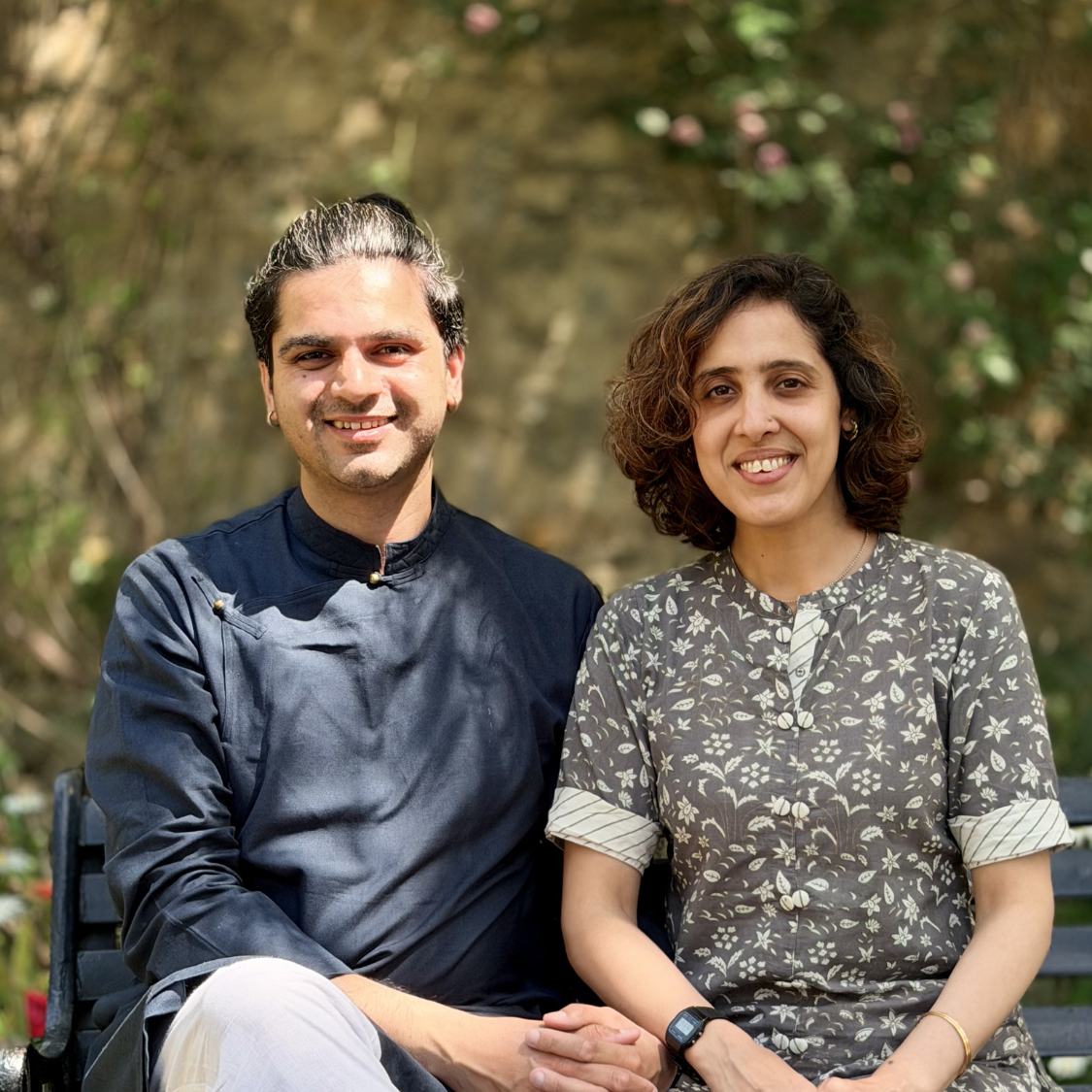

Part 2 of our series. Start with Part 1: The Questions We Usually Avoid.
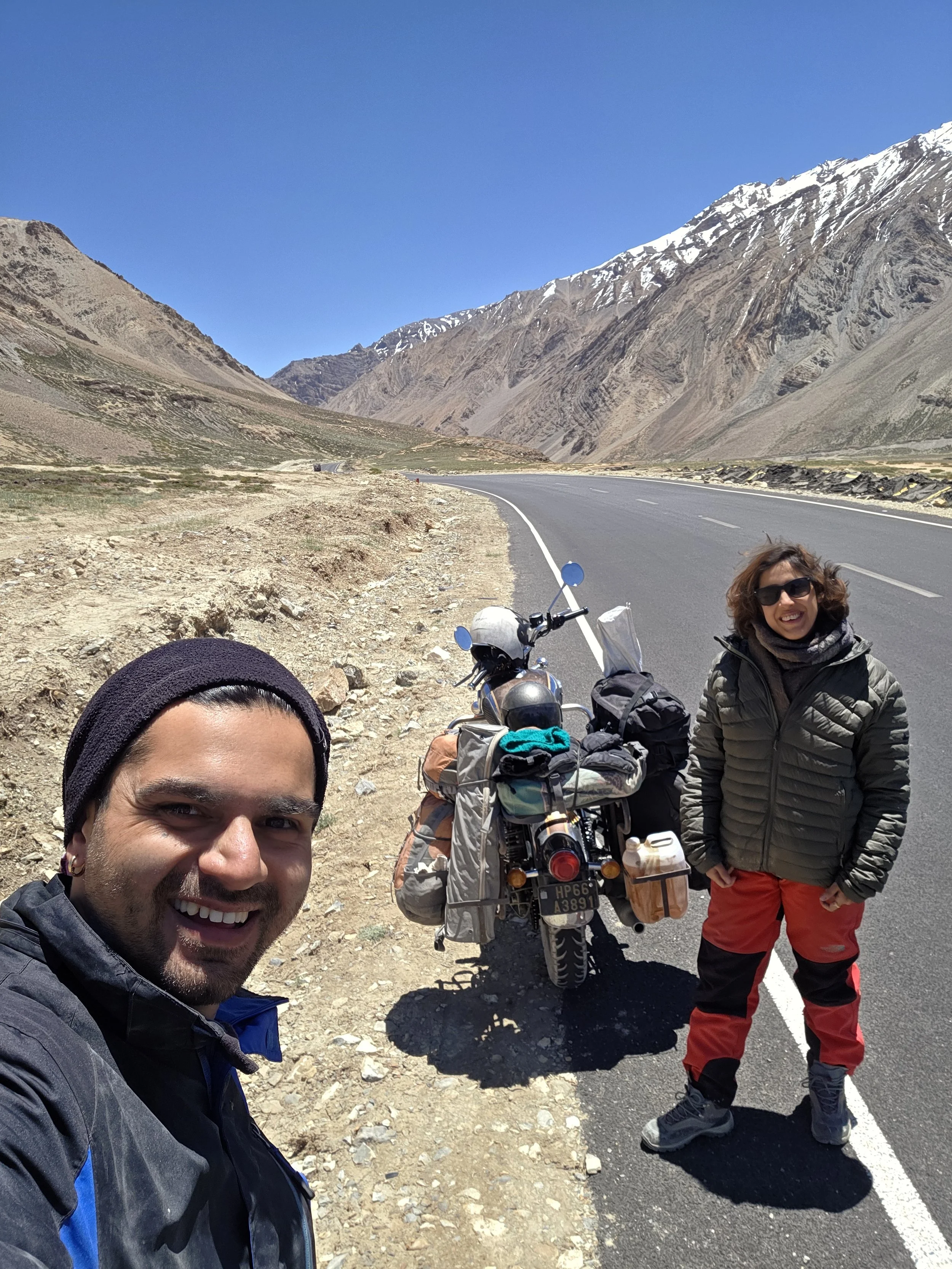
Just the two of us and one bike.
See, here's a question nobody asks a monk. Are you actually happy?
Aarti and I did. We rode all the way up to Leh to ask it, to a part of the world where winter can drop close to minus 30, and the monks still seem perfectly fine
I'd done Leh six or seven times before, back in my Tripver days. Always with a gang of ten bikers, always loud, always chaotic. That's how I made friends up there. This time it was just the two of us on one bike. Honestly? One of the most beautiful rides of my life.
Somewhere along the way our travel changed. I won't call it spiritual tourism, that makes it sound like a package. But these days our trips are mostly about hanging out with sanyasis and monks. And every single time, the same question pulls us in. How are these people so okay?
Let me back up a bit.
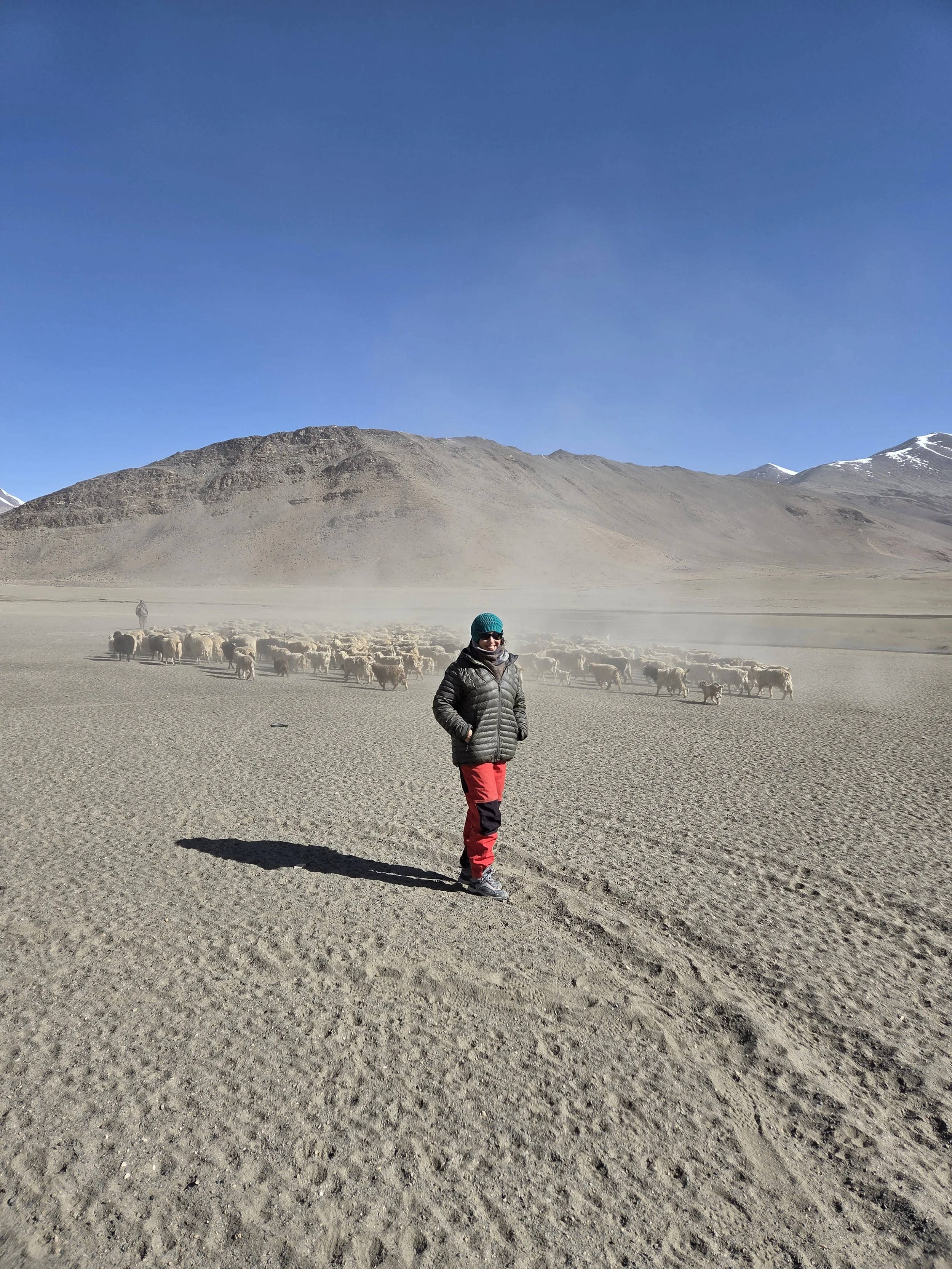
“How are these people so okay?”
Happiness on subscription
In Part 1 I told you about the hotels. The film stars, the CEOs, the Rolls-Royces. People who had everything, and so many of them were still stressed and unhappy.
What I understood much later is this. Most of us get our happiness the same way we get Netflix. On subscription. Through the five senses.
Your eyes want a new view, so you book a trip. Your tongue wants something, so you order in. Your ears want noise, so the earphones go in before you've even brushed your teeth. Every one of them is an input, and the mind sits there like a hungry customer waiting for the next delivery.
And it works! For like ten minutes. It's a sugar rush. Sweet, and then you're emptier than before, and off you go looking for the next one.
Psychologists actually have a name for this. The hedonic treadmill. There's a well-known study from 1978 where people who'd won the lottery weren't much happier than anyone else a while later. The new car just becomes the car. The new house becomes the house.
Then there's the other problem. Even when we're doing something nice, our mind usually isn't there. In 2010, two Harvard psychologists, Matthew Killingsworth and Daniel Gilbert, pinged 2,250 people on their phones at random moments and asked them what they were doing, how they felt, and whether their mind was actually on it. Minds were wandering 46.9% of the time. And this is the part that got me. What people were doing explained about 4.6% of their happiness in that moment. Whether their mind was wandering explained 10.8%.
So the thing we spend all our money on, what we're doing, matters less than the thing we never train. Where the mind is.
Honestly, that's the whole article. The rest is just the monks proving it.
Thikse, at morning prayers
We got to stay at Thikse Monastery, just outside Leh, and sit in on the morning prayers. For anyone who hasn’t been, Leh sits at around 3,500 metres in Ladakh, and the same region has Khardung La, the highest motorable road in the world, at about 5,800 metres. Up there, the cold isn’t weather. It’s a way of life.
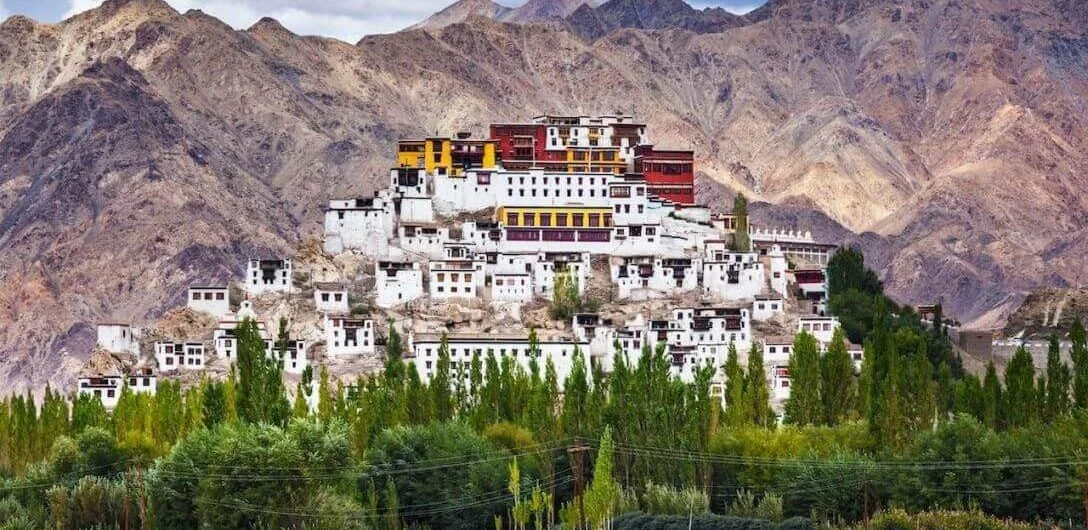
Thikse, sitting on its hill.
What I remember most is the vibration. When the chanting started, the whole hall went heavy with it. Heavy duty, in the best way. You don't hear it so much as feel it in your chest.
And later, sitting in the monks' dining hall, eating with all of them. I can't explain this properly. It felt like access I'd never get again in my life, like this was the one time I'd be let in. Magical.
Life up there runs on very little of what we'd call entertainment. No Netflix, no Swiggy, and winters that make Delhi's look like a joke. And yet the people we met were some of the gentlest, humblest people I've come across. I've noticed this my whole life, travelling. The closer people live to nature, the humbler they get.
One of the monks explained the Buddhist idea of compassion to us. Everyone there is kind to each other, he said, and most importantly, kind to themselves. You could actually see it. In how they spoke, how they moved around each other, how nobody was in a hurry to prove anything.
We asked the obvious question. How do you stay warm? There is a practice for it, a breathing technique, and we learned a little about it. We weren't allowed to film it, and I'm not going to explain it here either, because it isn't ours to explain. Some things are taught, not posted.
But science has looked at it. In 1981, with the Dalai Lama's help, a Harvard team led by Herbert Benson studied three monks in Upper Dharamsala who practised Tibetan inner-heat meditation. The monks could raise the temperature of their fingers and toes by as much as 8.3°C. It was published in Nature in 1982.
Sit with that for a second. A human being, making warmth from the inside, with breath and attention.
And us? We buy warmth. We buy comfort, mood, calm. All of it from outside.
Consuming happiness vs making it
Okay, this is the core of everything we learned, so let me say it plainly.
There are two ways to get happiness. You can consume it, from outside, through the senses. Or you can make it, from within.
Consuming isn't wrong, by the way. Good food is good. Travel changed my life, I've told you that. The trouble starts when it's the only way you know. Because then your happiness belongs to whoever controls the input. Your boss. The weather. The algorithm. The delivery app.
Yoga, at its heart, is a manual for making it yourself. That's why I call it the science of happiness. A method you test on yourself, like a lab, and you don't have to believe anything to start.
The Bhagavad Gita says it in one verse (6.17). Yoga becomes the destroyer of sorrow for the person who's balanced in eating, rest, work, sleep and waking. Destroyer of sorrow! Nothing in there about hamstrings.
Patanjali's Yoga Sutras open with a definition (1.2). Yoga is the stilling of the movements of the mind. Then he lays out eight steps to get there (2.29):
Yama: how you treat others
Niyama: how you treat yourself
Asana: a steady, comfortable body
Pranayama: working with the breath
Pratyahara: bringing the senses inward
Dharana: concentration
Dhyana: meditation
Samadhi: complete absorption
Look at number five. Pratyahara. Remember those five delivery boys from earlier? This is where they get called back home. Patanjali describes it (2.54) as the senses stepping back from their objects and following the mind inward.
Nobody's asking you to shut your eyes forever. The senses just start working for you instead of running you. You can still enjoy the biryani. The biryani just doesn't get to decide your mood for the week.
Then comes dharana, holding the mind on one thing. Which, by the way, is the exact opposite of that 46.9%.
And notice the order. Meditation is number seven. Seven! There's a reason. If you have no handle on how you live, no steady body and no command over your breath, and especially if you're going through something heavy, sitting down and closing your eyes can make things worse. A lot of meditation apps skip straight to step seven. That's like learning to drive by starting on the highway.
One more thing, because people mix these up. Peace and happiness are two different things. Peace is when nothing is bothering you. Happiness, the way yoga means it, is a joy that stays even when something is.
Here’s a practical way to check where you stand. Next time something small goes wrong, a cancelled plan, a rude email, a delayed flight, watch what happens to your mood. If it drops with the situation, that’s how much of your happiness is living outside you. No judgement. Most of ours used to.
And here’s the first tool, the one the old rishis started with. The mind is hard to grab directly, but it’s tied to the breath, so they went in through the breath instead. Before you reply to that email, take five slow breaths, with the out-breath a little longer than the in-breath. Then reply. That’s the whole reason pranayama sits at step four, before the senses and the mind.
You can’t buy that kind of joy. You have to make it, inside, a little every day. The Gita has a word for someone who’s got there: vijitendriya (6.8), one who has mastered the senses. It was never meant for a few saints. Anyone who keeps at the practice is meant to get there.
The pilot, the NASA guy, and Munger
At the Bihar School of Yoga in Munger, and at Rikhiapeeth, we met sanyasis who had done everything the world tells you to do. Degrees, careers, the works. And then they gave it all up.
We were told one of the senior swamis had been a pilot in his old life. Another had come from NASA. My first thought was, what the hell happened to you, man? Same story as the monks. You had everything, and you left. For Munger. In Bihar. Who does that?
The answer, when you sit with them long enough, is pretty simple. They realised life has more to offer than the material, and they went looking for it.
And they're super practical about it. No floating around, no mystery. You do the practice, you watch what happens, you adjust. Like a lab. That's when “science of happiness” stopped being a nice phrase for me and became the actual thing.
We’ll tell you what it did to us. When we left Munger, something had shifted that we still find hard to put into words. We could hear our conscious mind saying one thing and our subconscious mind saying something else, both at once, like two separate voices. We could feel each of our senses on its own, split apart, and every one of them completely relaxed. It was the most aware we’d ever felt.
That didn’t come from one trip. It came from years of practice, Raja Yoga, Karma Yoga and Bhakti Yoga together, with Hatha Yoga keeping the body steady. Looking back, all of it was preparing us for Kriya Yoga, in the tradition we follow. But that’s a story for another day.
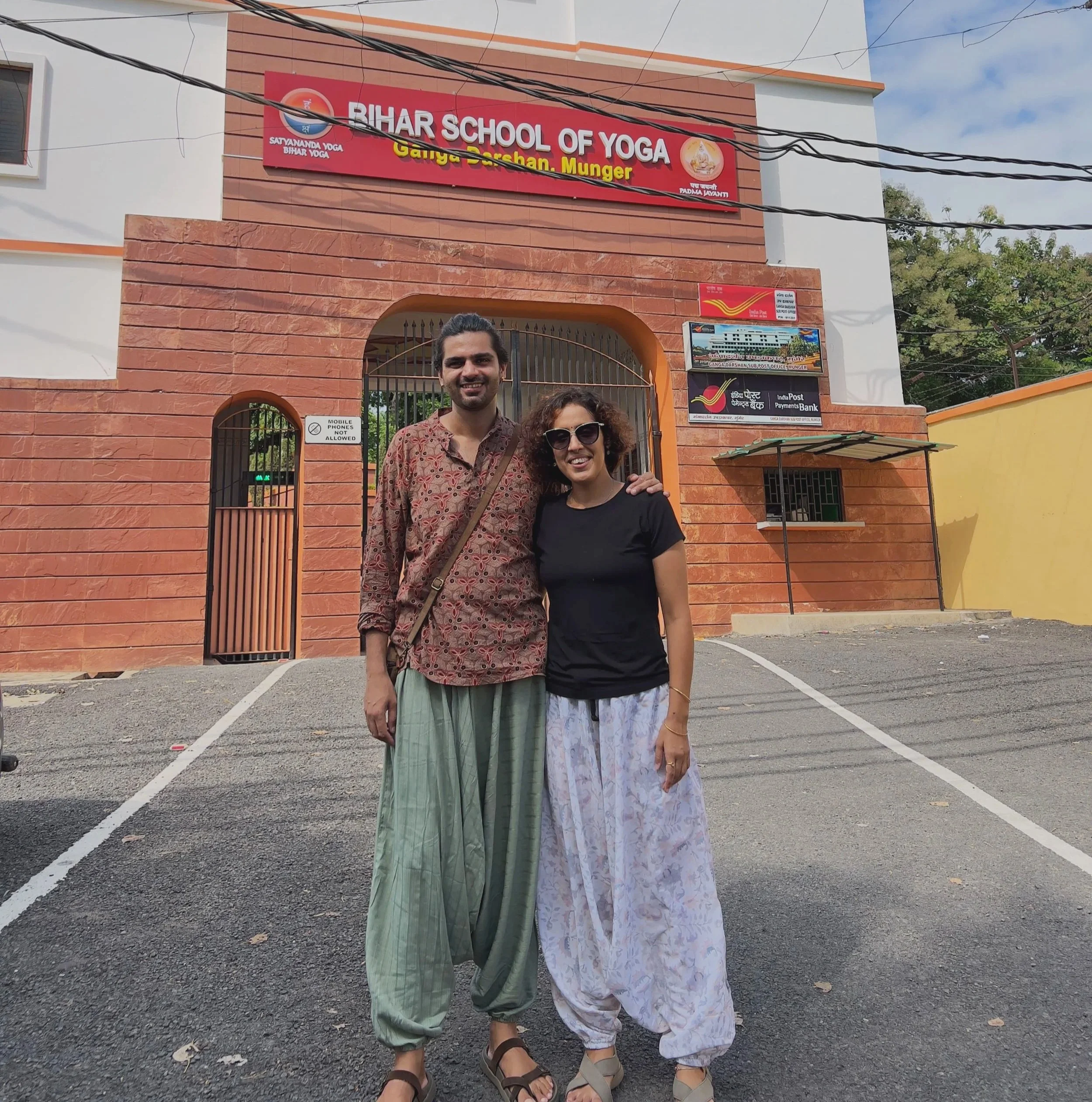
Outside the ashram at Munger. Phones not allowed inside :)
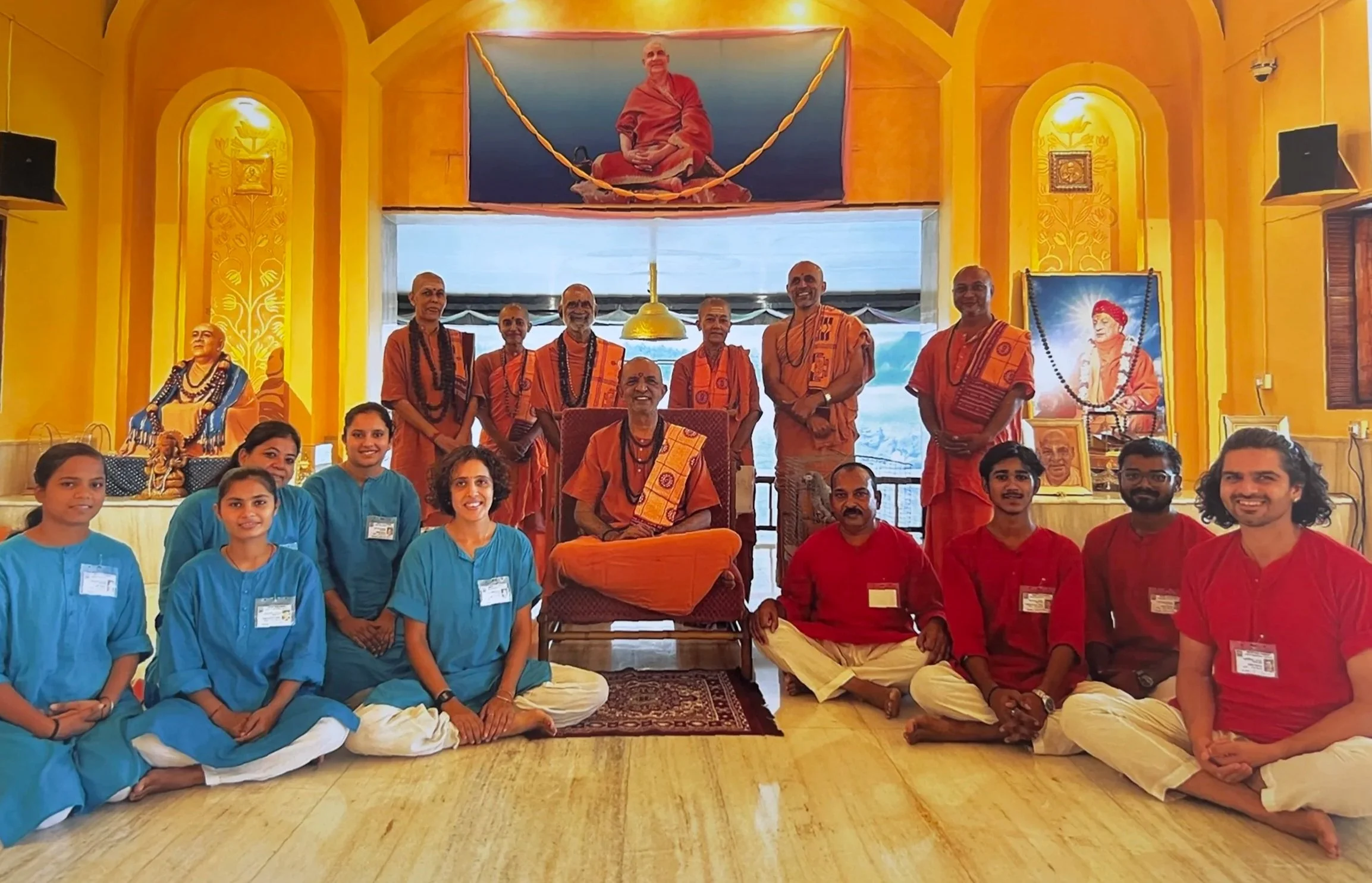
A rare frame, shot on a proper camera, not a phone. Our sannyasi teachers alongside Swami Niranjanananda Saraswati ji, who carries forward the lineage of Swami Satyananda Saraswati, and through him, Swami Sivananda Saraswati of Rishikesh. Click after our successful completion of certification of Advance Yogic Studies.
Thangka at Deer Park: dharana with a paintbrush
Deer Park was never the plan. We were passing through Bir, the little Himachal town better known for paragliding, and needed somewhere to stay. Someone mentioned Deer Park Institute, a centre for studying India’s classical wisdom traditions, and we thought, why not, let’s see what it’s about.
Then Aarti spotted a one-week course on Thangka, the Tibetan art of sacred painting. She’d always wanted to learn it and never knew how. So we extended our stay. Simple as that. People had come from all over the world for it.
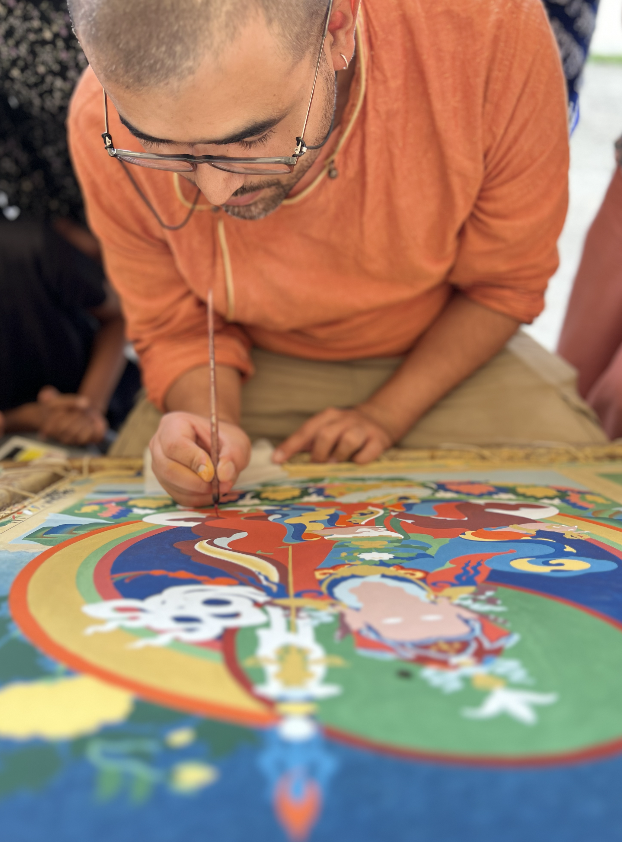
Our teacher monk from Leh who taught us Thangka Art
Our teachers were a couple. Let’s call them Tenzin and Mei. Tenzin was a monk once, from a village near Leh. He left the monastery for family life, and while studying Thangka at a university in Leh, he met Mei, who’d come all the way from Taiwan to learn it too. They got married in Leh, and today they’ve given their art to Buddhism and to teaching people Thangka. Their three kids were there with them the whole time.
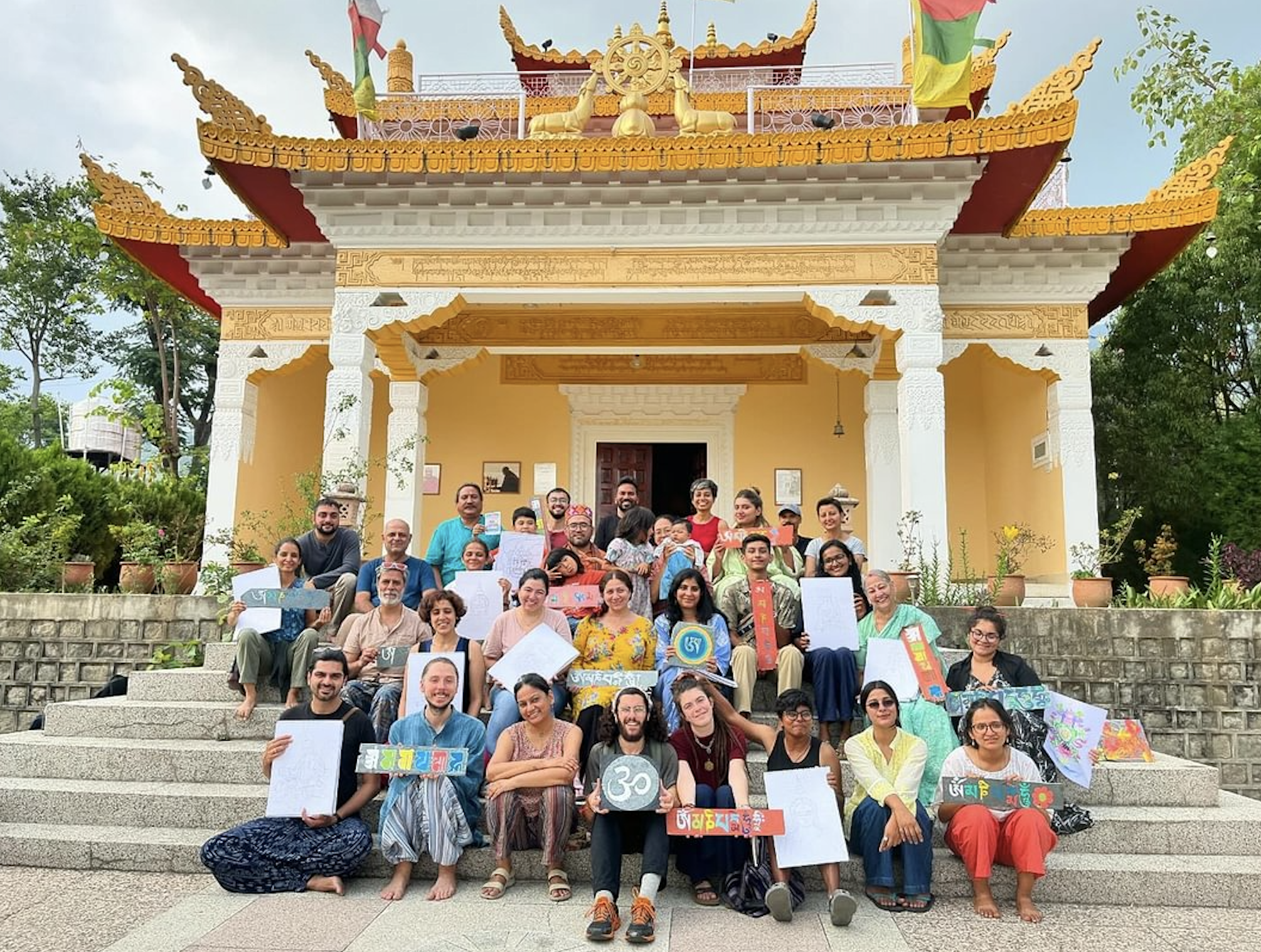
Our entire group from all across the world who learnt & drew Thangka for 07-08 hrs daily for 07 nights.
The first few days were hard, honestly. We were edgy and impatient, wanting to finish the line and move on. Thangka doesn’t let you do that. Once you know the structure, the drawing itself is simple if you have a free hand. The real work is the detail, and treating every line as sacred. Tenzin and Mei played mantras while we painted, and slowly our patience grew.
We stopped fighting the frame and became one with it.
That’s dharana, the sixth limb. Holding the mind on one point. With a paintbrush.
And their kids! Confident, independent, so happy. No babysitter. The youngest would sit and eat her own food, nobody shoving a spoon in her mouth, and then go off to look after everyone else. I still hear their giggles in my head.
We don’t teach Thangka at Yukah. But that week shaped the way we run our art therapy sessions. That’s how it goes for us. Small things we keep picking up along the way.
Sera Jey: the world behind the Golden Temple
Most people who visit Bylakuppe, near Mysore, go to one place: the Golden Temple. Its real name is Namdroling Monastery, it’s beautiful, and the tourists love it. We were riding from Mysore to Coorg and stopped for it too. Of course we did. Aarti and I are a bit gaga about monasteries.
What almost nobody knows is what’s behind it.
Sera Jey: the world behind the Golden Temple
Most people who visit Bylakuppe, near Mysore, go to one place: the Golden Temple. Its real name is Namdroling Monastery, it’s beautiful, and the tourists love it. We were riding from Mysore to Coorg and stopped for it too. Of course we did. Aarti and I are a bit gaga about monasteries.
What almost nobody knows is what’s behind it.
We called one of the monks we’d met at Deer Park and in Leh, and he said, I know someone there, he’ll show you around. That’s how everything happens on these trips. One monk knows another monk, who knows another. The monk at Sera asked me to come and pick him up from his place, somewhere past the Golden Temple.
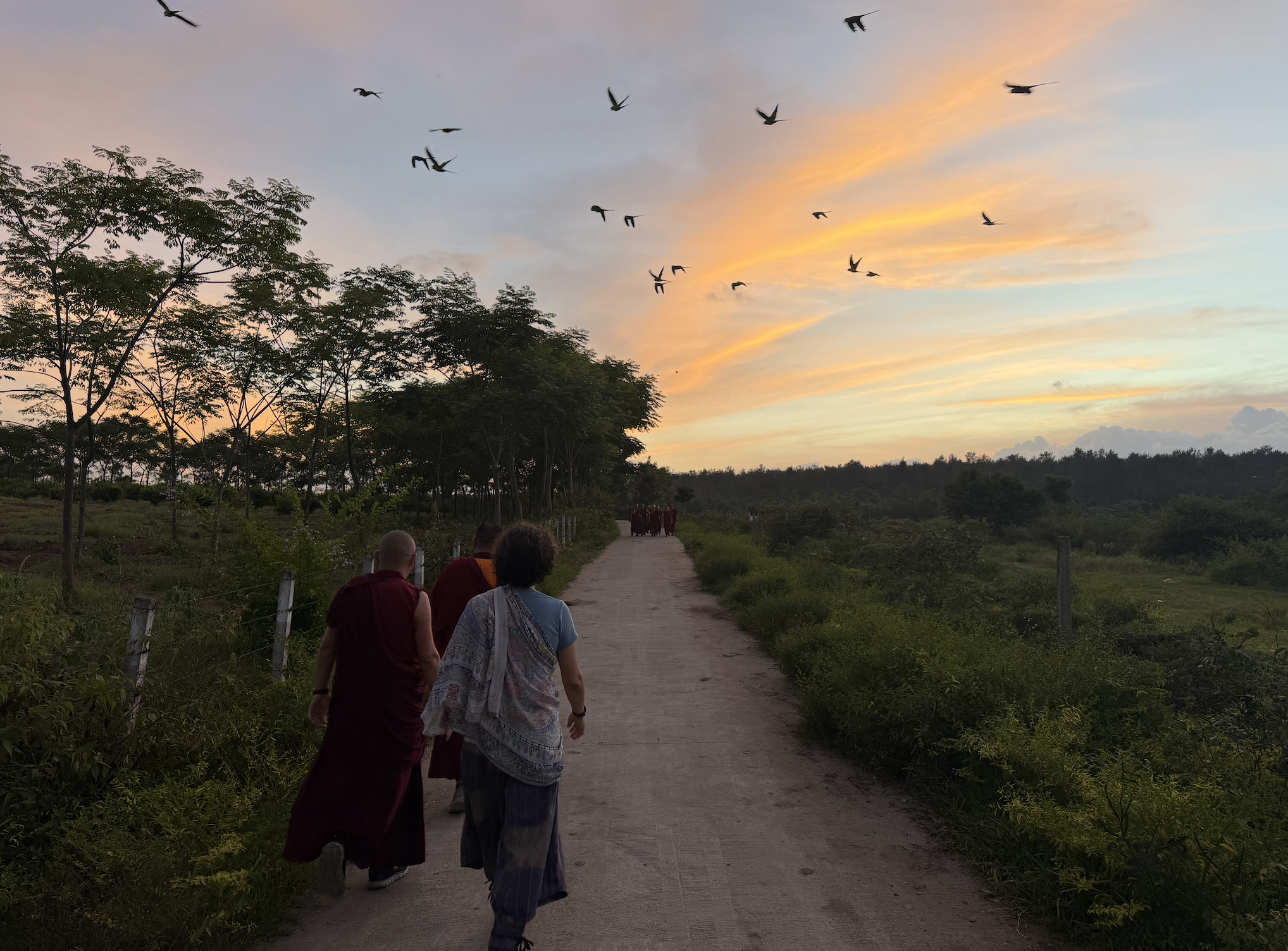
I rode in and honestly lost my mind. It felt like I’d entered Leh. Bylakuppe is one of the largest Tibetan settlements outside Tibet, and behind the tourist stop there’s a whole world. Sera, a huge Tibetan monastic university rebuilt here after the monks came into exile, with its two colleges, Sera Jey and Sera Mey. Temples. Classrooms. Young monks sitting exams. Debates in the courtyards. Monks out on their evening walks. Even cafés where they sit and chill once the day is done. And a nunnery close by.
Coorg could wait. We dumped it and stayed.
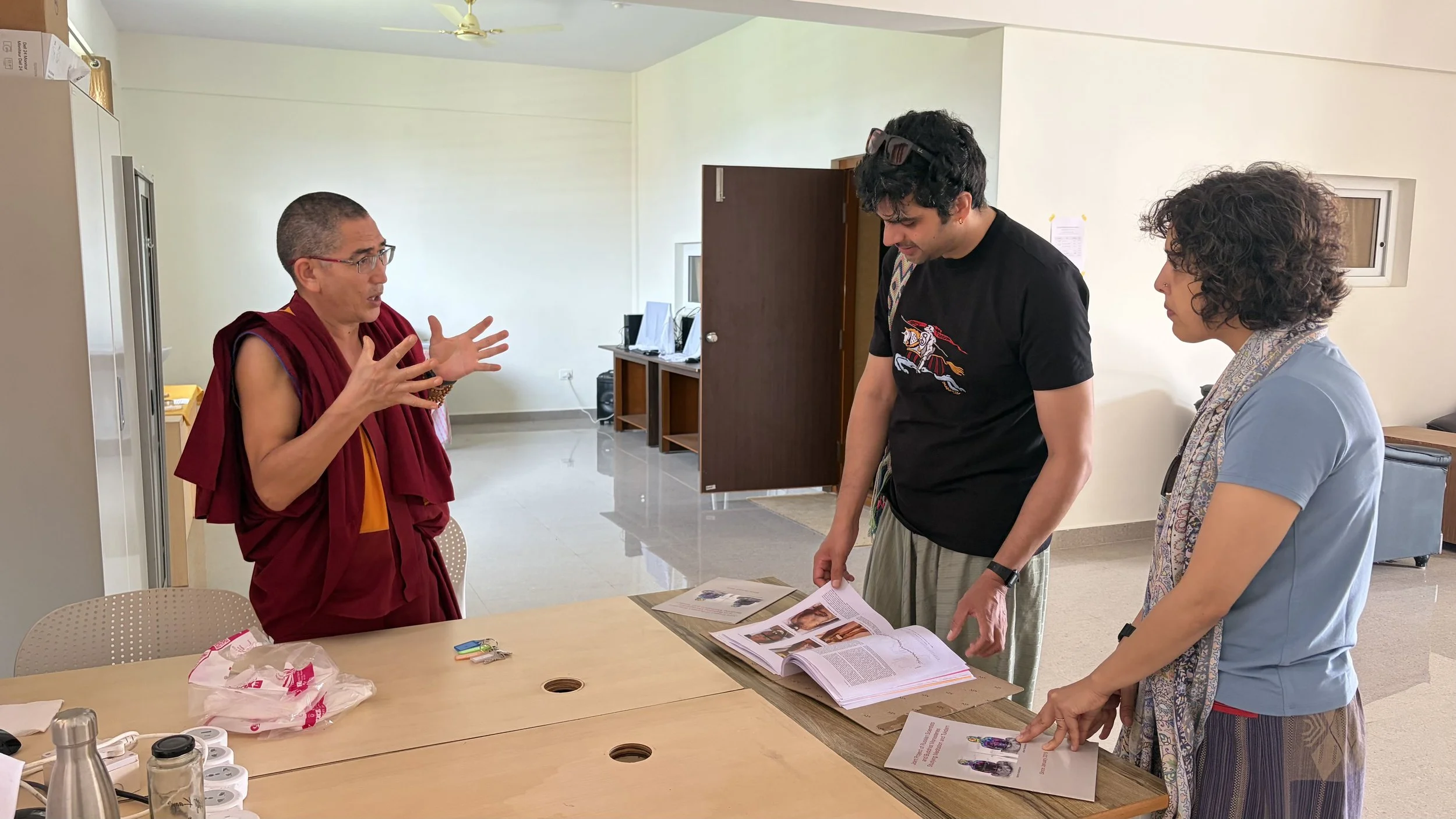
The monk turned out to be one of the humblest people we’ve ever met, and he holds a doctorate in Buddhism. He welcomed us with khatas, the white silk scarves Tibetans offer guests, found us a house to stay in for six or seven days, and walked us through the entire place on foot, explaining how it all works.
We spent hours talking about yoga and Buddhism side by side. Pranayama, the philosophy, where the two meet and where they part ways. For two people who’ve spent years in yoga, sitting with a monk like that was a rare chance.
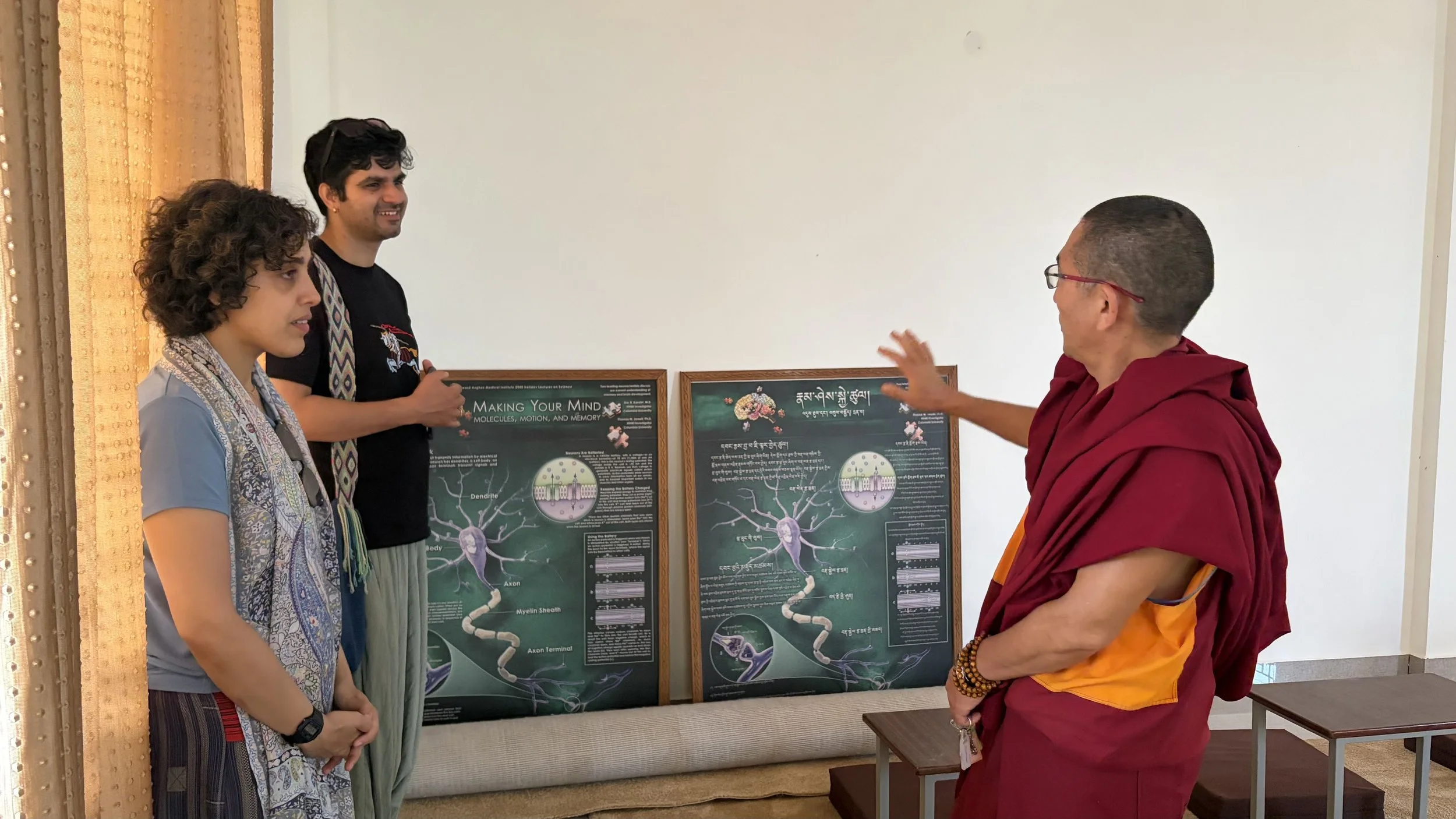
What stayed with me most was how they hold the old and the new together. They have a great leader in the Dalai Lama, and at his urging, Tibetan monasteries in India have added modern science to what monks study. At Sera Jey that means an actual classroom for meditation and neuroscience, with headsets that show your brainwaves on a screen. Delta, beta, gamma, all of it. Monks and teachers watching exactly what meditation does to the brain. Science, spirituality and everyday life, all kept in balance.
And towards the end of our stay, they gave us something I’ll never forget. An entire prayer hall, just for the two of us, to meditate in. Huge and silent. I still can’t fully explain what that felt like.
McLeod Ganj
In McLeod Ganj, above Dharamshala, we visited the temple complex where the Dalai Lama lives and teaches. These are the same hills where, more than forty years ago, those Harvard scientists sat with monks and watched them warm themselves from the inside.
Rishikesh: sound, and the bhav behind it
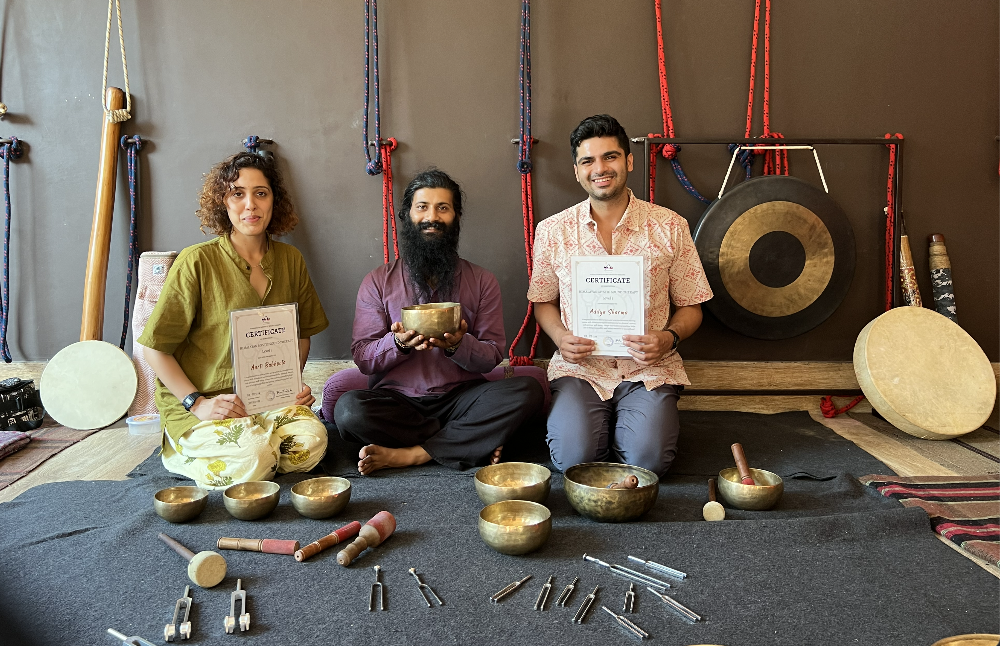
Rishikesh actually came first. It was one of the very first trips Aarti and I took together, and we went with one question. How can a few metal bowls make a person feel calm?Sound healing goes by a lot of names. Sound bathing, vibrational therapy, singing bowls. But yoga has taken sound seriously for centuries. Nada Yoga, the yoga of sound, treats listening as a way into meditation. The Hatha Yoga Pradipika, written in the 1400s, ends with nadanusandhana, following the inner sound until the mind goes quiet. And a whole Upanishad, the Mandukya, is about one sound: Om.
The science is younger and still small. A 2017 study of 62 people found they felt less tension, anger and fatigue after a singing bowl meditation, especially those who’d never tried one before. It was a small study with no comparison group, so nobody should call it proof. But it matched what we felt in that room.
We got lucky in Rishikesh. We found a good teacher who taught both the theory and the practice, and we came away certified. Then we started teaching.
In the early days, sound baths were the easiest thing to offer. One hour, no week-long commitment, so people said yes. We did a lot of them, in Chandigarh, Kurukshetra and Mysore, including for a lot of yoga therapists. It was a good way to introduce ourselves.
And we learned fast that anyone can strike a bowl. What matters is knowing which bowl to play, and when. Then knowing how to work with the person in front of you and whatever they’ve walked in with. Then the technique. And above all of it, the bhav, the feeling you play with. No certificate gives you that part, and it’s how we still play today.
Try this tonight
Five minutes. No app, no teacher, no subscription. One of the simplest forms of pratyahara we were taught.
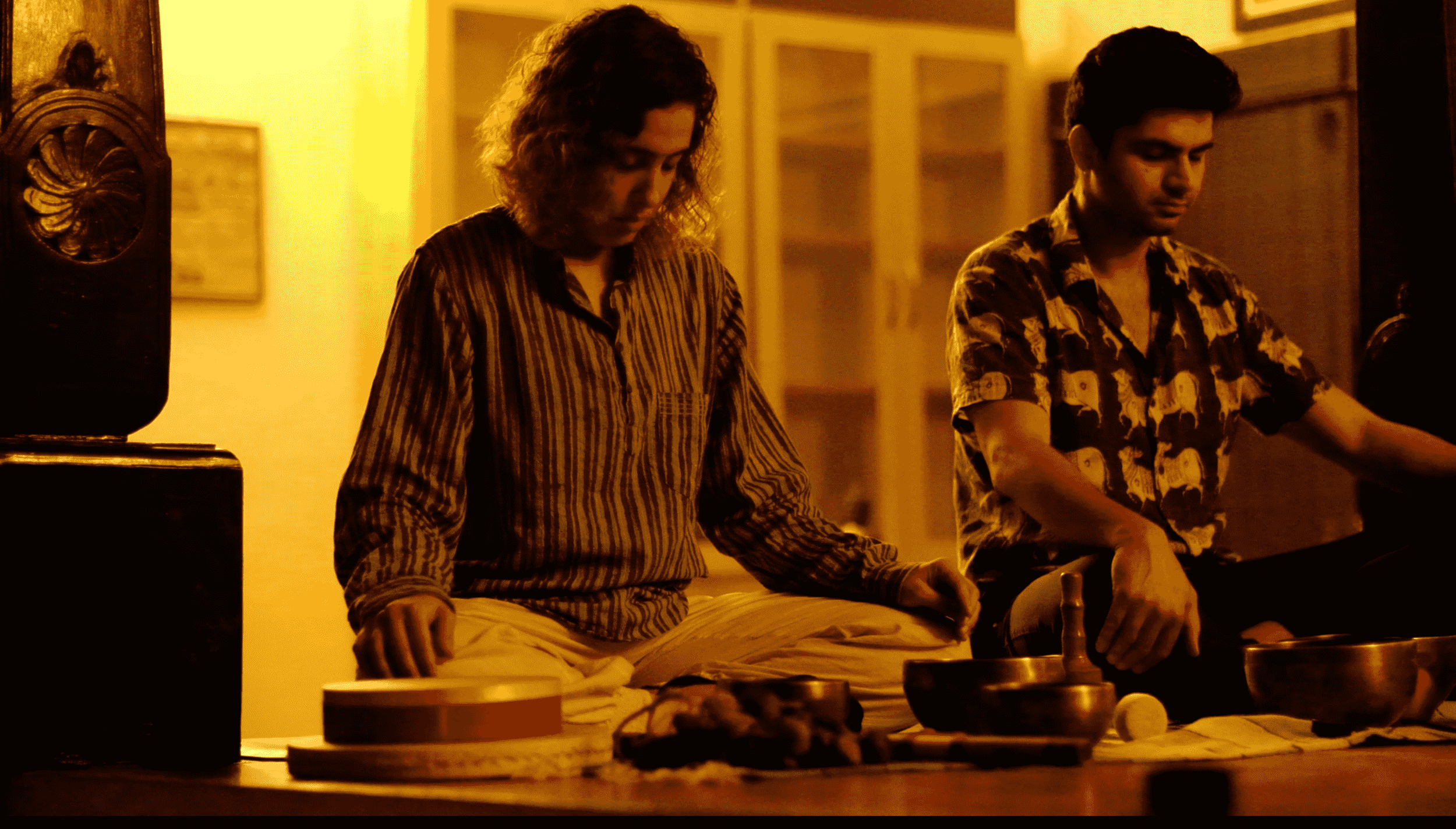
Five minutes. That's all it asks.
Sit comfortably. Spine upright, not stiff. Steady and comfortable is the whole instruction.
Close your eyes. Listen for the farthest sound you can hear. Just notice it. Don't name it.
Bring your attention a little closer. The next sound. Then the next.
Now the sounds in the room. Then your own breath.
Stay with the breath for a minute. When the mind runs off, and it will, bring it back. No drama.
That's it. You just did step five, and a little bit of step six.
If you're going through something heavy right now, skip this one for now. Start with a walk and a few slow breaths, or talk to a teacher. That's just the order of the eight steps, nothing to do with you.
So, were they happy?
Yes. They just needed a lot less from outside to feel okay.
That's the line between the hotel guests and the monks, for me. Same humans, same five senses. One lot was running on input. The other had learned to make their own.
And that's what we teach at Yukah. The method, so you can make it yourself. Happiness itself we can't hand you, sorry.
Tell me what comes up for you. I read every comment.
Aadi
This is Part 2 of a series. In Part 3, I get into why yoga, with all this going for it, has such a terrible PR problem.
FAQs
What is the science of happiness in yoga? Yoga treats happiness as something you can produce from within through practice, instead of consuming it through the senses. Its classical texts lay out a step-by-step method, from how you live and breathe to pratyahara and concentration, to steady the mind. The Bhagavad Gita (6.17) calls yoga the destroyer of sorrow.
What is pratyahara? Pratyahara is the fifth of Patanjali’s eight limbs of yoga. It means bringing the senses inward, so they stop pulling the mind from one input to the next. It doesn’t shut the senses down. It puts them to work for you instead of letting them run you.
What is dharana? Dharana is the sixth limb of yoga: holding the mind steadily on one point. It’s the training ground for meditation.
What are the eight limbs of yoga? Patanjali’s Yoga Sutras (2.29) list eight: yama, niyama, asana, pranayama, pratyahara, dharana, dhyana and samadhi. Physical postures are only one of the eight.
Why shouldn’t meditation come first? In the classical order, meditation is the seventh step. Ethics, a steady body and breath come first. For someone going through something heavy, closing the eyes without that foundation can bring up more than they can handle, so it’s wiser to build stability first or work with a teacher.
What is the hedonic treadmill? It’s the tendency to get used to good things, so each new pleasure fades back to your usual level of happiness. A well-known 1978 study found lottery winners weren’t much happier than others a while after winning.
Does a wandering mind make you unhappy? A 2010 Harvard study by Matthew Killingsworth and Daniel Gilbert found people’s minds wandered 46.9% of the time, and that mind-wandering predicted unhappiness more strongly than the activity they were doing.
Can Tibetan monks really raise their body temperature? A 1982 study in Nature, led by Herbert Benson of Harvard, found that three monks practising Tibetan inner-heat meditation in Upper Dharamsala could raise the temperature of their fingers and toes by as much as 8.3°C.
What is Thikse Monastery? Thikse is a Tibetan Buddhist monastery on a hilltop near Leh, in Ladakh. Aadi and Aarti stayed there and attended its morning prayers.
What is Sera Jey Monastery? Sera Jey is one of the main colleges of Sera Monastery, a large Tibetan Buddhist monastic university in Bylakuppe, Karnataka, near Mysore. Aadi and Aarti stayed there for six to seven days as guests of a monk who showed them how the monastery lives and works.
What is the Bihar School of Yoga? The Bihar School of Yoga is a yoga institution in Munger, Bihar, founded by Swami Satyananda Saraswati. Rikhiapeeth, in Jharkhand, is an ashram in the same tradition.
What is Thangka? Thangka is a Tibetan Buddhist painting tradition, usually on cloth, that demands long hours of focused, detailed work.
What is the difference between peace and happiness in yoga? In yoga, peace is the absence of disturbance, while happiness is an inner joy that stays even when things go wrong. Yoga treats that joy as something you build from within through practice, starting with the breath, because the mind and breath are linked.
What is the Golden Temple in Bylakuppe? The Golden Temple is the popular name for Namdroling Monastery in Bylakuppe, Karnataka, near Mysore. Bylakuppe is one of the largest Tibetan settlements outside Tibet, and the colleges of Sera Monastery, Sera Jey and Sera Mey, are close by.
What is Deer Park Institute? Deer Park Institute is a centre in Bir, Himachal Pradesh, for the study of India’s classical wisdom traditions. It runs courses in Buddhist philosophy, meditation and arts such as Thangka painting.
Is Thangka painting a form of meditation? It can be. Thangka demands hours of attention on fine, detailed lines, which trains the same skill yoga calls dharana: holding the mind on one point. Traditionally, painters treat the work as sacred practice.
What is a sound bath? A sound bath is a session where you sit or lie still while instruments such as singing bowls are played around you. A small 2017 study of 62 people found participants reported less tension, anger and fatigue afterwards, though larger controlled studies are still needed.
What is Nada Yoga? Nada Yoga is the yoga of sound. It uses chanting, sound and deep listening as a path into meditation. The Hatha Yoga Pradipika describes nadanusandhana, following the inner sound, as a way to still the mind.
Sources
Bhagavad Gita, Chapter 6, Verses 8 and 17.
Patanjali, Yoga Sutras, 1.2, 2.29 and 2.54.
Hatha Yoga Pradipika, Chapter 4 (nadanusandhana).
Mandukya Upanishad.
Killingsworth, M. & Gilbert, D. (2010), A Wandering Mind Is an Unhappy Mind, Science 330: 932. Harvard Gazette summary
Benson, H. et al. (1982), Body temperature changes during the practice of gTum-mo yoga, Nature 295: 234–236. Abstract
Brickman, P., Coates, D. & Janoff-Bulman, R. (1978), Lottery winners and accident victims: Is happiness relative?, Journal of Personality and Social Psychology 36(8).
Goldsby, T. L. et al. (2017), Effects of Singing Bowl Sound Meditation on Mood, Tension, and Well-being: An Observational Study, Journal of Evidence-Based Complementary & Alternative Medicine 22(3): 401–406.