
The Questions We Usually Avoid
Most of us ask ourselves this at 2 a.m., then go back to scrolling. Aarti and I (you'll meet her soon) couldn't.
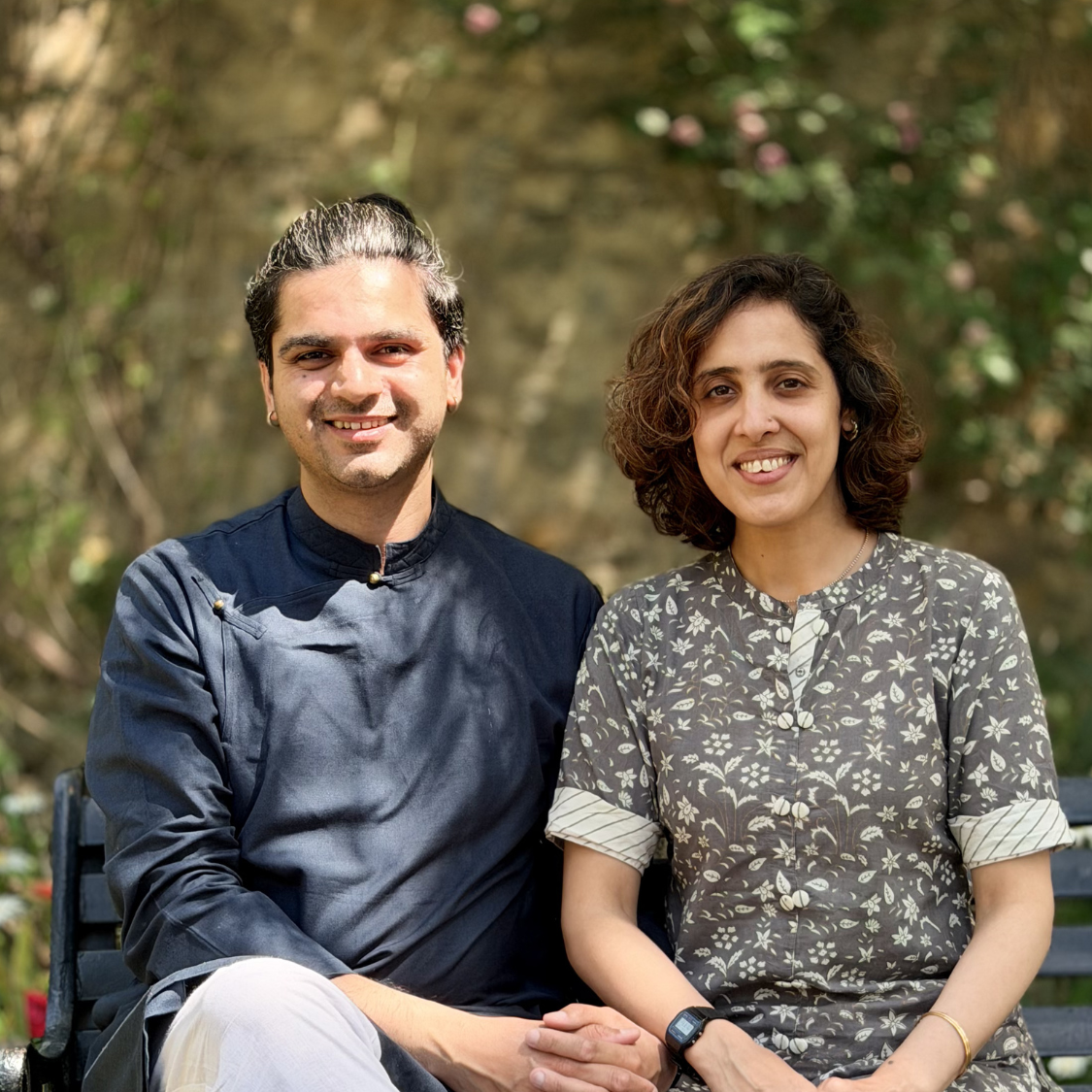
Hey, I’m Aditya, most people call me Aadi. This is my first piece here, so fair warning: I’m the guy who asks “How are you?” and actually waits for the answer. You say “fine,” and I’ll ask again. Some people laugh, some get really conscious and suddenly check their phone and a very few actually tell me and that's usually the best conversation of my day.
What most people call uncomfortable questions, I call real conversations. I’ve been like this since 11th grade, I think.
While my friends were being normal teenagers, I was writing a poems like"Death Wins". Why do people kill each other over land and religion? Why so much sorrow and misery? Why spend our childhood studying for exams, and our adult life paying EMIs for the next big thing? Why can't we just jam with friends, eat good food and travel a bit? We're all going to die anyway, right?
Because I was the youngest in the family, my parents and my sister would just smile and say, “Aadi, go see the world before you try to change it.
So I did…..
CHASING THE LIFE I WAS SUPPOSED TO WANT
Like most of the people I also though the objective of life was to somehow eliminate fear. It was about making enough money so you are no longer afraid of losing it & becoming successful enough that you no longer worry about what people think. Create enough certainty that life can no longer surprise you.
So I did everything I thought would make me secure. Earned qualifications, built careers globally in established organisations. Built businesses, relationships and reputations. A life that, from the outside, looked pretty sorted and successful to all my peers.
Let’s rewind a little.
I started in the luxury glamour high-end world as a trainee at The Oberoi Group of Hotels, did my post-grad at ITC Hotels, and spent years living out of suitcases pre-opening luxury hotels across India. Every day I was surrounded by rich, fancy, high-strung people, the ones everyone wanted to be or at-least be friends with.
But there was a breaking point. I looked around and realised that the people I was killing myself to become, the celebrity, CEOs, the industry titans, had everything I was chasing and yet to my surprise they were still stressed, worried & unhappy. The only difference was that they had more expensive scotch, better cars, and people to serve them. I realised material comfort and luxury matter, in balance. But they're not the end game. Not for happiness, not for life.
I was born in Shimla in Himachal Pradesh, that is in the lower Himalayas. And here's a fun fact: I used to solo travel a lot. Everywhere I went, I noticed the a common patter, people who lived closer to nature seemed genuinely happier. Around 2011, I was working on the pre-opening of ITC Grand Chola in Chennai, one of the most glamorous hotels in the country at the time. I had just become a manager. My career was peaking and it was burning me out so, I thought of taking a solo bike trip to Auroville. Google said it was an experimental township near Pondicheery, where people from all over the world live together, built around human unity and sustainable living. And I was curious ? because I was still finding my answer.
I was lucky to meet (lets call him) Omer, who lived there. He took me to his home, where he lived with wife & two beautiful children. To my surprise I actually travelled inside Auroville a lot, met farmers, community members, studied their entire community model, and saw a way of life that felt less like a stage performance. People were deeply connected to each other. More real, less fake.
BUILDING SOMETHING, THEN WALKING AWAY
Auroville really hit me, and so did more experiences like it later in life. I’ve always been someone who loves to help people, so I wanted to build a platform that could give others that same exposure and perspective shift. That became Tripver, a crowdsourced backpacking travel company. The idea was to make safe solo backpacking trips affordable for everyone, because after Auroville and my other life-changing trips, I felt travel shouldn’t be optional. It should be mandatory.
This was when travel blogging was just starting in India, so the places we explored and the experiences we had were still raw and protected. And I did help a lot of people. I used to go on the trip myself personally & if you dig through old Facebook or TripAdvisor reviews from back then of the Tripver company, you’ll find a gazillion travellers writing about how ‘Aditya changed their life.’. I felt I was doing something right. Meeting people from different social classes, beliefs, financial backgrounds and cultures can completely change your perspective and that's an essential part of growing as a person which I had successfully able to get in many people lifes who travelled with me.
The business was super profitable, and I had great partners. But by the time I was 29, I cashed out. Why? Because it was starting to become more about the numbers than the people.
On paper, life looked great. But spending so much time with perpetual travellers made me realise something: eventually, everyone misses home. And I had a happy, loving family to miss.
So instead of just travelling the world, I decided to build a home of my own.
THE MOUNTAIN
I had always questioned how the modern world worked. The basics of life are clean air, fresh food and fresh water. We pollute all of it in the name of progress, and then we’re happy to sit in a room with an air purifier, drinking purified water, while we spend our lives trying to entertain ourselves.
Life had taught me that if you want to change someone perspective, you have to give them an experience a kind of an exposure. A taste of a life they’ve never tasted. As David Attenborough said, “No one will protect what they don’t care about, and no one will care about what they have never experienced.”
So I wanted to build a microcosm. A place where looking up at the stars could turn into a lesson & a walk through the forest could help you understand your place in it. Where children and adults learnt together, simply by living there, growing curious, slowing down, and discovering how much was enough. A place to practise living simply and sustainably on this earth without leaving it poorer for our presence, sharing meals, stories and everyday life with travellers from across the world.
It became my life’s mission and my way of contributing to the society and humanity.
So I packed up and moved to a disconnected mountaintop in Solan, Himachal Pradesh, where the nearest shop was 30 minutes away, to co-create India’s 1st ever community retreat called Vaatalya with my family.
People thought I had lost my mind. My friends were like, “What the hell are you doing? You’re 29. You have all the money you need. Why are you isolating yourself on a mountain?” Even my parents were against it at first.
Was it terrifying? Absolutely, yes.
When you take a leap of faith like that, you think about the worst case. Mine was selling chai and samosas from a “rehri” (Road side stall in hindi) outside a park. And I was okay with that. It’s one life, I wanted to give myself a chance to see what else it could be.
Six years later, what began as a leap of faith has become Vaatalya, a thriving, invite-only space. Traveller come to connect with nature, learn about the stars & forests, and find what I once hoped this place could offer a : little peace & a different way of looking at life.
Vaatalya Community Retreat has since been featured in nearly 15 publications and platforms, including The Lallantop, Hindustan Times and The Indian Express. Artists, seekers and travellers from across the world have found their way here.
But what means the most to me is seeing people make room for something they rarely have time for: their own questions, their curiosity, and each other.
I took a chance on a different way of living. Together with my family, I built a place where we could share it.
Meanwhile, Aarti
Around that same time, Aarti (my now life partner) was making her own quiet exit from a very different kind of corporate trap.
Aarti started working young at seventeen, just like me. For almost 18 years then, her world was Six Sigma, certifications, project management and business transitions. She spent nearly 16 of those years at Genpact, which started out as part of GE Capital & worked her way up to Senior Manager managing projects for global businesses.
Then she moved the space of international student mobility, building events & platforms that brought universities and students together across the world. She was now officially living out of a suitcase while she travelled to nearly fifty countries. On paper & on facebook her life was what others dream theirs will be.
But her body didn’t agree. Aarti had been an overweight teenager. You would know if you have been a fat kid in school, the kind of comments you can get from relatives at weddings, from a friend who is hotter than you in school, from strangers who felt they had a right to say something. Like so many girls around her, she’d spent years trying to fix herself from the outside. She had been body shamed since she was a teenager and that kind of stayed with her. So like everyone else she got stuck with the never ending cycle of Diet Trends. She tried the soup diets, the crash diets, the shakes, the slimming products, the latest beauty fix, anything that promised to make her look the way she was told she should. She was brilliant at her work. But with her own body, she kept falling for whatever the food and health industry was selling that quarter. The weight loss regime never ended. And along the way came PCOS & severe gut issues, made worse by years of crash dieting, that stayed with her for a long time. All she really lost was money, motivation, strength & self worth.
She had reached a state I am sure all of us have reached once in our life or continue to where most of us are running on empty for so long that even rest stops refilling us. You keep functioning, but you're not really living.
THE LETTER SHE SIGNED
And then came a turning point in her life. In her late-20s, doctors told her she needed L4–L5 spinal surgery for her degenerating disc. But she had the same attitude as me (i think). A fearless attitude to never settle along with a constant refusal to lie to herself. A drive to actually live…. and keep striving until she could feel it.
She walked into an Iyengar Yoga class with that wrecked spine. It's an asana style developed by a famous world renowned yoga guru B.K.S. Iyengar that focuses on precise alignment and uses props like belts, blocks and ropes. When her teacher, Nivedita Joshi, found out about her spine, she didn't offer empty reassurances rather she told Aarti plainly: asana, the physical practice of yoga, can help you, but you're doing this at your own risk & actually got a letter signed. Most people would have walked out right there.
But Aarti knew Nivedita’s story. Nivedita Joshi, Aarti’s teacher had been wheeled into B.K.S. Iyengar’s institute in Pune, unable to move her hands or legs. A year later, she walked out on her own. So Aarti signed the letter. For someone already facing deep spinal issues, that took real nerve.
The practice pulled her back. Like, really pulled her back. Her spine grew stronger, the pain eased, and the surgery she’d been told she needed was no longer on the table.
You can read all about what yoga can do. But when it happens to you, when you live it, and you walk away from something like spinal surgery, that’s a very big deal. And then Mysore happened.
All this while, she was still working. And alongside her work and her practice with Nivedita, she started studying food and nutrition through Stanford, Emory and LMU München. After years of being sold diets, she finally understood nutrition in depth, for herself.
A WEDDING, AN ASHRAM AND MYSORE
And then life did something even more funny. It sent her a wedding invitation.
Her friend Mohit invited her to a wedding, and it was unlike any wedding she had been to. On the surface, it was a regular wedding. But the people felt different. There was a calm about them. Nobody was showing off, nobody was trying to impress anyone, nobody was fake. Just simply humble, present, and happy in a way that didn’t need an audience. It was nothing like the big fat Indian weddings we are use to, some of them even sat down to meditate, right there at the wedding. Could you imagine ?
Aarti was amused. She turned to Mohit and asked, “What the hell is going on here? Who meditates at a wedding?”
That’s how she found out that many of the guests followed the meditation teachings of Paramahansa Yogananda. And that was the start of it. She began going to one of Yogananda’s ashrams, where she found Bhakti yoga, the yoga of devotion. She learned to chant and play the harmonium, and soon she was teaching the children there. In those moments, she felt deeply connected.
Around the same time, she read Autobiography of a Yogi, and it pulled her even further in. From there, she kept travelling to ashrams. And then Mysore happened.
What started as a visit turned into almost two years. She went there to study asana but then it went deeper & deeper. She studied under a Yogacharya, Bharat Shetty and later taught alongside him, training yoga teachers herself. Yoga took her further than the mat. It led her to the Vedas and the classical philosophies of India. She already knew the science of food. And in those texts, she found the philosophy behind it: Yuktahaar. Eating in balance, not in extremes. The exact opposite of every diet she had ever tried.
Her body and mind had changed completely. The girl who had been body shamed, who had tried every diet out there, was now stronger and healthier than she’d ever been. Her PCOS symptoms went away & her gut healed. She could sit in meditation for four to five hours at a stretch.
And through all of it, one rule never changed: she has never taught a single thing she hasn’t first tested on her own body, starting with her own spine.
WHAT THE WELLNESS INDUSTRY DOESN'T TELL YOU
She now wanted to share what she had learned with the world. So she stepped into the wellness industry.
And the more she saw of it, the more uncomfortable she became. Most of the industry runs on the same model, and it’s time we understood why. Companies run on investors, and investors want returns. The returns come from things you have to keep renewing: your meal plan, your supplement plan, your app subscription, your coach.
The problem isn't plans or coaches. It's when they're built so you never stop needing them. Even when the intentions are good, and people do get results for a while, almost nobody is teaching them how to stand on their own. The business depends on people coming back, not on them getting better and leaving.
And when someone doesn’t get better? Too often they just become a number. Part of the cost of doing business. She couldn’t digest that. These were human beings who had come looking for a way out of their suffering. So she walked away from it.
But let’s be honest, it’s our fault too. As customers, we rarely want to go deeper than fixing the problem in front of us. We want the anxiety to stop. The sugar levels to come down. We’re quick to accept that it’s all genetic, or that the body simply falls apart with age. We want the benefits without having to change much.
And I get it. Nobody ever taught us another way. We were taught to outsource our health, the same way we outsource everything else.
So there she was. Late 30s. No job. No safety net. Walking away from a steady career to start something of her own, in an industry she had just watched fail the people it was meant to help. That’s not brave in a movie way. That’s terrifying in a 3 a.m., staring-at-the-ceiling way.
With everything she knew, she could have taken the easy route. Online yoga classes. A detox retreat. Something quick, something that sells.
She didn’t.
Because she knew what had actually changed her life. Not a class. Not a cleanse. A complete turnaround, of her body, her habits, her mind and the way she saw food. And now she had the formula. She had lived it, studied it, and taught it to people of every body type and age.
So she built Parivartan. The word means transformation. A personalised, one-to-one residential reset, built on the exact opposite of everything she had seen in the industry: a system designed so that one day, you don’t need us anymore.
WHERE OUR PATHS MET
That’s where I met her. She came to Vaatalya, and we started working on a few ideas together.
I think what she liked about me was that my intentions were right. Our values matched. In yoga they’re called yamas and niyamas, basically the rules for how you treat others and how you treat yourself. We wanted the same things out of life, we just had no clue how to get there yet. And we both wanted to do some real good for people, the kind they’d remember us for, not the kind you put on a brochure.
Back then I had no idea this would become the most important partnership of my life. We were just two people who had walked away from everything, asking the same two questions:
Why does feeling okay take so much arranging?
And how much of our happiness is actually ours, and how much depends on life going our way?
Yukah our nomadic wellness school came out of those questions. Today, Aarti and I teach self-reliant wellness, which really just means learning tools you can take home and use on your own. The whole idea is to help an individual feel more capable of navigating life yourself, so that over time, you need less guidance from us and have more confidence in yourself.
Those questions eventually became Yukah, our nomadic wellness school. We built it on one idea: wellness without dependencies.
Today, Aarti and I teach self-reliant wellness. That means for your own wellness or your own sanity you are not dependt on a teacher but your own self.
The more you learn, the less you need us, or anybody at all, to feel okay. No more running to the next detox, a weekend spa, a new yoga class or a nutritionist every time life gets heavy. You start trusting yourself. If we’ve done our job right, one day you’ll outgrow us. That’s the whole point.
Before we could teach anything, we had to find our own answers. That took almost a decade. Apart from certifications in Yoga, nutrition, and Ayurveda from global universities around the world, we feel the real learning happened elsewhere.
They happened with our conversations and learning in ashrams like Bihar School of Yoga in Munger and in Rikhiapeeth with highly educated, double PHD sanyasis who had given up everything after a point in life when they had it all.
With Tibetan monks in Leh, and with Dalai Lama in McLeod Ganj above Dharamshala, sitting calmly in cold that would send most of us running indoors. In Nada Yoga, the yoga of sound in Rishikesh. In the ancient temples of South India.
And whatever we learned, we tried on ourselves first.
Somewhere in all of that, two people searching turned into a life together. Not a filmy love story (sorry). Just two people who keep choosing to grow, every single day.
That’s the next piece.
Before you go though, remember that 2 a.m. question from the top? Next time it shows up, try not to scroll past it. Sit with it for a bit. Am I living the life I actually want, or the one someone scripted for me?
We sat with it. Everything changed after that.
Tell me what comes up for you. I read every comment.
— Aadi
This is Part 1 of a series. In Part 2, I’ll take you into the ashrams and monasteries where Aarti and I went looking for answers, and the science of happiness, behind what we found.
FAQs
Who are Aditya (Aadi) Sharma and Aarti Babhoota?
Aadi and Aarti are life partners & co-founders of Yukah Holistic Wellness School. Their home is Vaatalya Community Retreat. Together they bring over a decade of ancient India’s wisdom via Yoga & Ayurveda focused on promoting self-reliant wellness, combining traditional Indian philosophies with modern health sciences.
What is Yukah?
Yukah is a wellness school run by Aditya Sharma & Aarti Babhoota. It teaches people what no other wellness school does i.e self-reliant wellness. Its philosophy is “wellness without dependencies”: giving people practices they can use on their own when real life hits, so they eventually don’t need a teacher. Learn more at yukah.co.
What is Parivartan?
Parivartan, meaning “transformation”, is Yukah’s Holistic Wellness School personalised, one-to-one residential reset of 7 or 11 nights. It’s designed so you leave with practices you can keep up on your own.
What is Yuktahaar?
Yuktahaar comes from Bhagwat Gita. It is a classical yogic idea of eating in balance, not in extremes. It’s also the name of Aarti’s nutrition programme at Yukah.
What is Vaatalya?
Vaatalya is a nine-acre, invite-only India’s 1st community retreat on a mountaintop in Solan, Himachal Pradesh, co-created by Aadi | Aditya Sharma and his family. The idea of the space is to connect people with nature.
What is Auroville?
Auroville is an experimental township near Pondicherry in South India, founded in 1968. It’s dedicated to human unity and sustainable living, with people from around the world living together. Aadi’s stay there inspired the community model behind Vaatalya.
What is Iyengar Yoga?
Iyengar Yoga, developed by B.K.S. Iyengar, focuses on precise alignment and uses props like belts, blocks and ropes so every body can practise safely. That makes it a common choice for people with back or joint problems.
What is Bhakti yoga?
Bhakti yoga is the yoga of devotion. It uses chanting, music and prayer to open the heart, and is one of the classical paths of yoga described in the Bhagavad Gita.
What is Nada Yoga?
Nada Yoga is the yoga of sound. It uses sound, chanting and deep listening as a path into meditation.
What does “high-functioning and falling apart” mean?
It describes people who seem to be doing well at work and in life but feel exhausted, stressed or unsteady inside, often a sign of burnout.
What is burnout?
The World Health Organization describes burnout as a result of chronic workplace stress that hasn’t been managed. Its signs are exhaustion, feeling detached or cynical, and feeling less effective at work.
SOURCES
Auroville, official website. auroville.org
Iyengar Yogakshema, About Nivedita Joshi. iyengaryogakshema.org
IndeaYoga Shala, Mysore (Yogacharya Bharat Shetty). indeayoga.com
World Health Organization (2019), Burn-out an “occupational phenomenon”. who.int
Yukah, About Aarti & Aditya. yukah.co/about
One article a week from Adi and Aarti on understanding your habits, handling uncertainty and finding more contentment in everyday life. Delivered to your inbox, free.
Subscribe by email
No spam. Unsubscribe anytime.